Swamp Cooler Repair: What Common Symptoms Can Mean
Learn the difference between an equipment problem, an airflow problem and the limits of evaporative cooling—without diagnosing your own rooftop unit.
On this page
A swamp cooler is mechanically simpler than many refrigerated systems, but a symptom rarely identifies a single failed part. A wet-pad system depends on water distribution, a moving air stream, functioning controls and a way for indoor air to escape. Roof-mounted equipment also introduces access, electrical and water-leak concerns.
How a direct evaporative cooler works
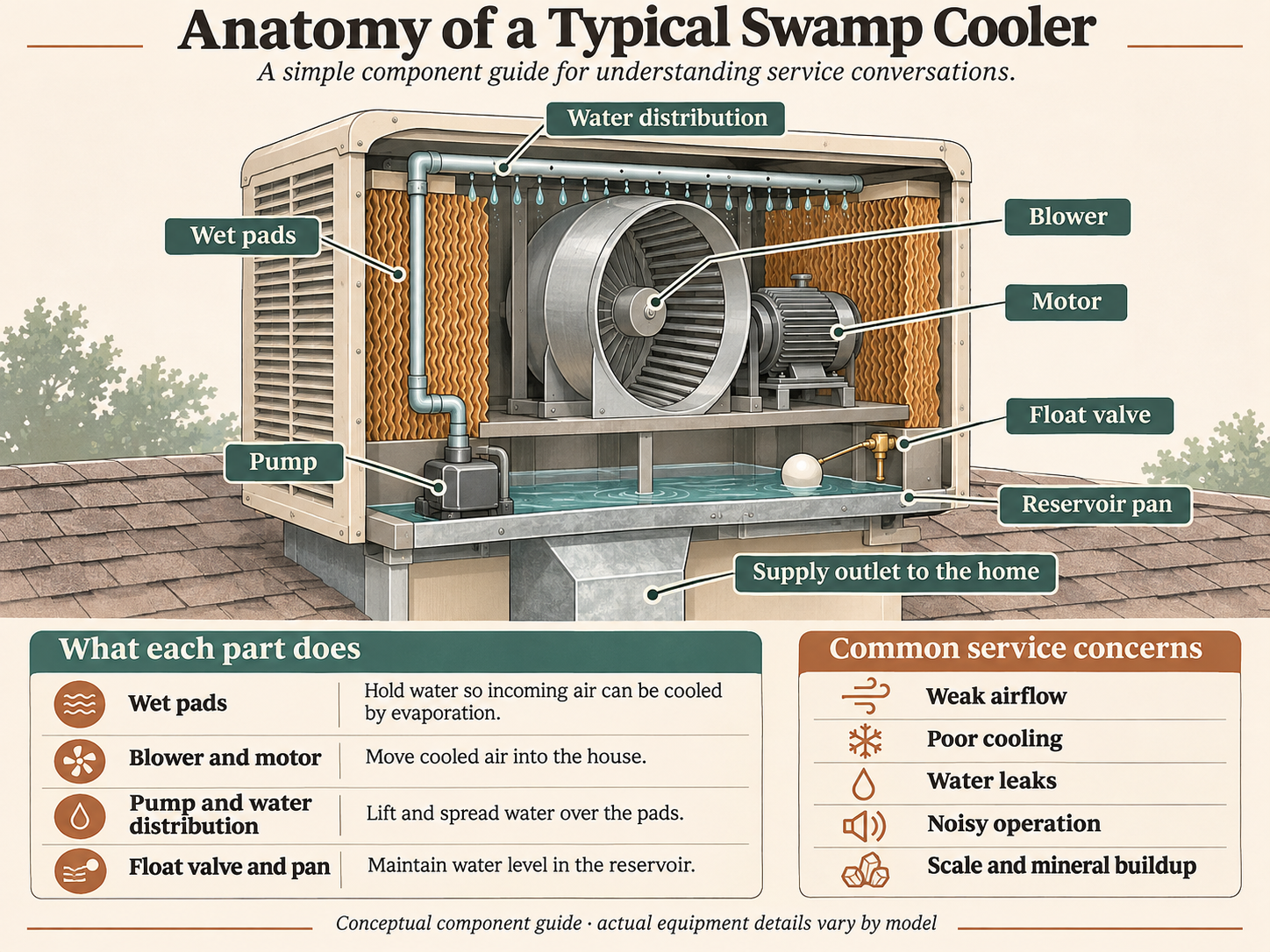
Outdoor air passes through wetted pads. Evaporation removes heat from that air while adding moisture, and a fan or blower pushes it into the living space. For this arrangement to work as intended, air must be relieved through open windows or another suitable opening. Because evaporation depends on outdoor air conditions, a correctly operating cooler may feel less effective on unusually humid days.
The fan runs, but the air isn't as cool as before
Possible areas of inspection include dry or blocked pads, water distribution, pump function, float or supply-water problems, and weak airflow. Mineral deposits can interfere with water movement through pads; deterioration or scale can also mean that part of the cooler needs servicing. A professional can distinguish those possibilities from weather-related comfort limits or a poorly sized system.
An immediate replacement recommendation based only on “warm air” would skip important context. Conversely, a cooler that runs but struggles to cool certain rooms may be exposing a distribution or ventilation limitation rather than a single broken component.
The fan doesn't start—or makes a new sound
The cause might involve power or controls, motor components, belts or bearings, depending on cooler type. Humming, scraping or squealing can be clues, but they aren't remote diagnoses. Electrical components and moving parts can be dangerous. Avoid bypassing switches, opening live enclosures or working on rooftop equipment unless you are qualified and equipped to do so.
Leaks, water stains or mineral buildup
Water on the roof or staining below a cooler can originate from several places: supply plumbing, the float, drain, pan, water distribution or the roof connection itself. A wet spot alone doesn't establish that the roof covering or the cooler pan is at fault. Because long-term moisture can damage building materials, leaks deserve timely attention by an appropriate professional.
Mineral scale is a normal consideration where water evaporates and leaves dissolved minerals behind. That doesn't mean aggressive chemical cleaning is safe for every cooler. Maintenance and pad selection should follow the manufacturer's guidance and the material of the unit.
Weak airflow and uneven room comfort
A blocked pad, dirty intake, blower issue or distribution problem can affect delivery. Poor relief ventilation may also change how a cooler behaves. Cooling in rooms far from the supply path can differ from the hallway under a roof outlet. An installer should consider both the air being pushed in and the route by which it leaves the house.
When it's more than a repair question
If the cooler operates reasonably well but never meets household comfort needs during certain weather, repeat parts replacement may not address the real complaint. That is when repair versus conversion becomes a legitimate discussion. Maintaining an evaporative system and considering refrigerated air are different decisions; neither is a universal recommendation.
What a homeowner actually needs to do
Say what you observed in ordinary language: “It's running but not cooling,” “there's a leak near the roof unit,” or “the fan started making a noise.” A receiving provider can ask follow-up questions, discuss whether they service evaporative coolers and decide how to assess the equipment. No parts diagnosis or pre-call technical checklist is required.
For Utah County service inquiries, call 502-395-6063. This independent publication may receive compensation for qualifying third-party routed calls.
Sources and further reading
Independent homeowner information. We do not perform HVAC work. For a service inquiry call 502-395-6063. Routing depends on availability and qualifying calls may compensate this site. Referral disclosures.